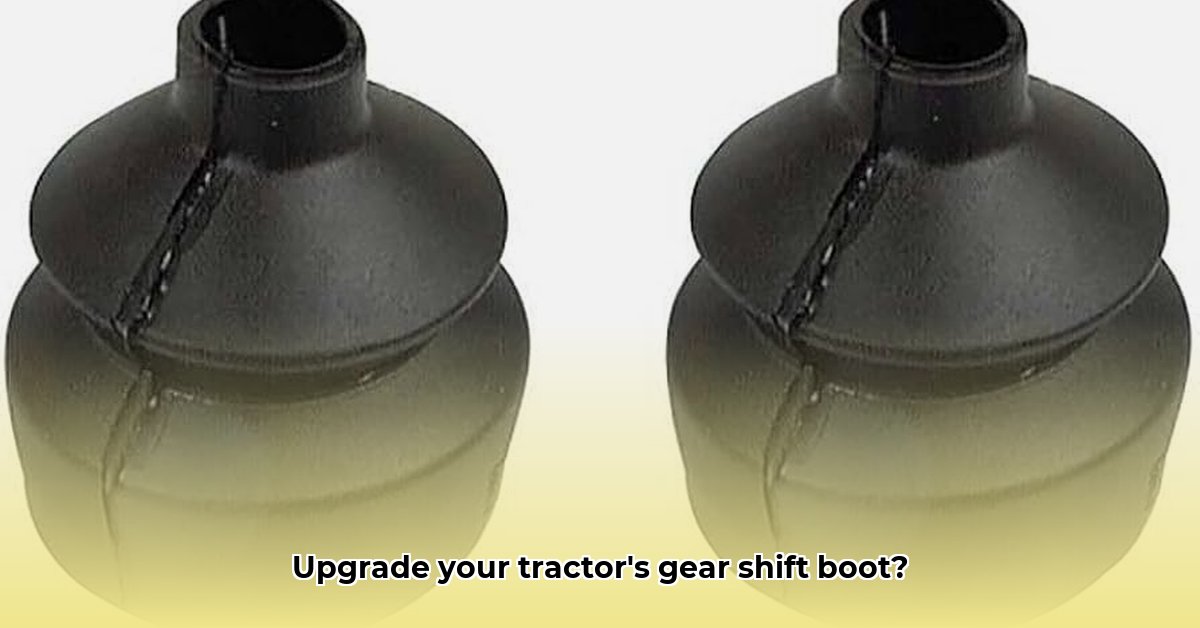
Understanding Tractor Gear Shift Boots
That tattered gear shift boot on your tractor isn't just unsightly; it compromises your machinery's protection against the elements. Dirt, dust, and moisture can damage internal components, leading to costly repairs. Replacing it is a straightforward, preventative maintenance task that will significantly extend your tractor's lifespan. Choosing the right boot is crucial for optimal functionality and longevity. This guide will help you navigate the process, from selecting the ideal material to completing the replacement yourself.
Defining the Terms
Let's clarify terminology. The gear shift boot, also known as a gaiter or bellows, is the protective cover for your tractor's gearshift mechanism. This seemingly small part plays a significant role in preventing dirt, dust, and water from entering the sensitive internal components.
Material Matters
Several materials are used in manufacturing gear shift boots, each with its own pros and cons:
- Leather: Offers superior durability and a classic aesthetic. However, it's often the most expensive option and requires more careful maintenance.
- Vinyl: A budget-friendly choice, available in various colors. However, its durability is lower than leather or high-quality rubber alternatives, particularly under harsh conditions.
- Rubber: A durable and water-resistant option, ideal for rugged environments. Rubber boots are often seen as the workhorses of the market, but quality can vary significantly.
- Neoprene: Offers a good balance of durability, cost-effectiveness, and weather resistance. This material frequently outperforms vinyl and standard rubber in harsh conditions.
The best material selection depends on your climate, the intensity of your tractor's use, and your budget. A farmer in a desert climate might prioritize a UV-resistant rubber or neoprene boot, while someone in a snowy region might opt for durable leather or a reinforced rubber blend.
Choosing the Right Tractor Gear Shift Boot
Selecting the correct boot is paramount for a perfect fit and trouble-free installation. This section outlines the key considerations.
OEM vs. Aftermarket
Original Equipment Manufacturer (OEM) boots, produced by the tractor's manufacturer, ensure a perfect fit and often come with a warranty. They are typically more expensive. Aftermarket boots offer a potentially more cost-effective alternative, but quality can vary significantly. Thoroughly research and compare brands before committing to an aftermarket option.
Isn't it true that selecting a high-quality boot from the start can save you money on repairs down the line?
Compatibility
Precise compatibility is crucial to avoid costly mistakes. Always cross-reference your tractor's specific model and serial number with the boot's specifications. Many online retailers provide detailed compatibility charts or search tools to simplify this process.
Material Selection Revisited
Consider your operating environment. Extreme temperatures, whether hot or cold, and high UV exposure require boots built to withstand these conditions. Neoprene and high-quality leather are strong contenders in extreme environments.
Price Range and Considerations
Prices vary greatly – expect to pay anywhere from a few dollars for basic vinyl boots to several hundred for high-end leather options. The price reflects materials, build quality, and brand recognition. A more expensive, durable boot can ultimately save money in the long run by extending its service life.
Replacing Your Tractor Gear Shift Boot: A Step-by-Step Guide
Replacing a gear shift boot is a feasible DIY project for individuals with basic mechanical skills. However, safety should always be the top priority.
Safety First: Before beginning any work, always disconnect the tractor's battery to prevent accidental electrical shocks.
Tools Needed:
- Screwdrivers (Phillips and flathead)
- Pliers
- Possibly a small pry bar or trim removal tool
- Your new tractor gear shift boot
- Cleaning supplies (e.g., rags, degreaser)
Step-by-Step Instructions:
- Disconnect Battery: Disconnect the tractor's battery negative terminal.
- Remove the Old Boot: Carefully detach the old boot from the gearshift mechanism. This might involve unscrewing fasteners or gently prying it loose. Take photos as you disassemble to aid reassembly.
- Thorough Cleaning: Clean the gearshift mechanism completely, removing all dirt, debris, and grease. A clean surface ensures a proper seal for the new boot.
- Install the New Boot: Carefully position the new boot over the gearshift mechanism, ensuring it aligns correctly and fits snugly. Follow the manufacturer's instructions.
- Secure Fasteners: Secure all fasteners firmly and accurately.
- Reconnect Battery: Reconnect the battery's negative terminal.
- Test Functionality: Test the gearshift to ensure smooth operation.
Troubleshooting: If you encounter difficulties, consult your tractor's owner's manual or seek assistance from a qualified mechanic.
Market Overview and Future Trends
The tractor gear shift boot market is experiencing modest growth, driven by increased tractor ownership and the need for regular preventative maintenance. E-commerce has significantly expanded access to various options. The future likely holds more durable, weather-resistant materials, incorporating advanced polymers and improved manufacturing techniques.
Conclusion: Proactive Maintenance for a Smooth Ride
Regular maintenance, such as replacing worn-out gear shift boots, significantly extends your tractor's lifespan and prevents costly repairs. By following this guide and choosing the right boot for your needs, you'll ensure your tractor's gearshift remains protected and functions smoothly. Remember, a little preventative maintenance goes a long way.